 kudhub
Source files
Use approved Git, S3, and public URL files without uploading another copy.
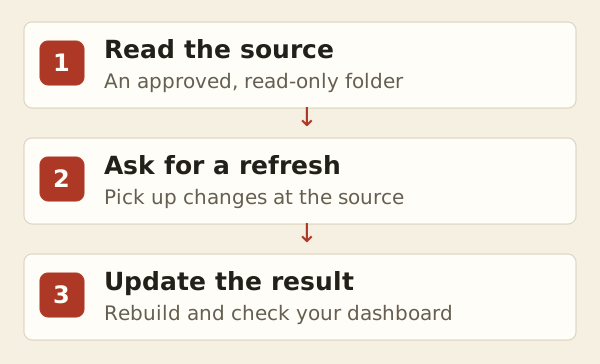
“Refresh the sales source, check the new rows, and update the dashboard.”
- Read: your assistant uses the source as a read-only folder.
- Refresh: explicitly ask for newer data; cached reads do not expire automatically.
- Keep: copy important files into your workspace for independent recovery.
History depends on the source. Git and versioned S3 can retain references to older files. Unversioned S3 and URL caching do not preserve historical copies. Current owner permission is always required.
Set access in Connections.
Technical details
Pins and historical reads
Git and S3 appear at /sys/mounts/<connection-name>; URL files share /sys/mounts/urls.
| Source | What refresh preserves |
|---|---|
| Git | A verified repository revision. Symlinks and submodules are not followed; LFS pointers remain files. |
| Versioned S3 | Object-version references. Refresh before first access; deleted remote versions fail instead of using current content. |
| Unversioned S3 / URL | No historical copy. Save files locally when their bytes must be retained. |
Failed pin refresh keeps the previous pin. If S3 versioning is suspended, the next refresh switches current work to live data; older pins keep their version references. Changed connection origins, roots, or identities can make old pins unusable.
Cache and URL limits
The cache survives restarts, has no expiry, and may evict entries under capacity pressure. Refresh clears cached data even if pin refresh fails; workspace rollback does not restore it. Missing blocks still need the remote source, and a changed representation requires refresh.
URL files send no credentials and reject redirects and private destinations. Sources without usable range reads are staged first, normally up to 1 GiB per file within cache capacity.
Select remote mounts explicitly; ordinary workspace file patterns do not search them. See Connections for permission rules.
Agent reference: kud mount reference; source workflow: kud guide data.